
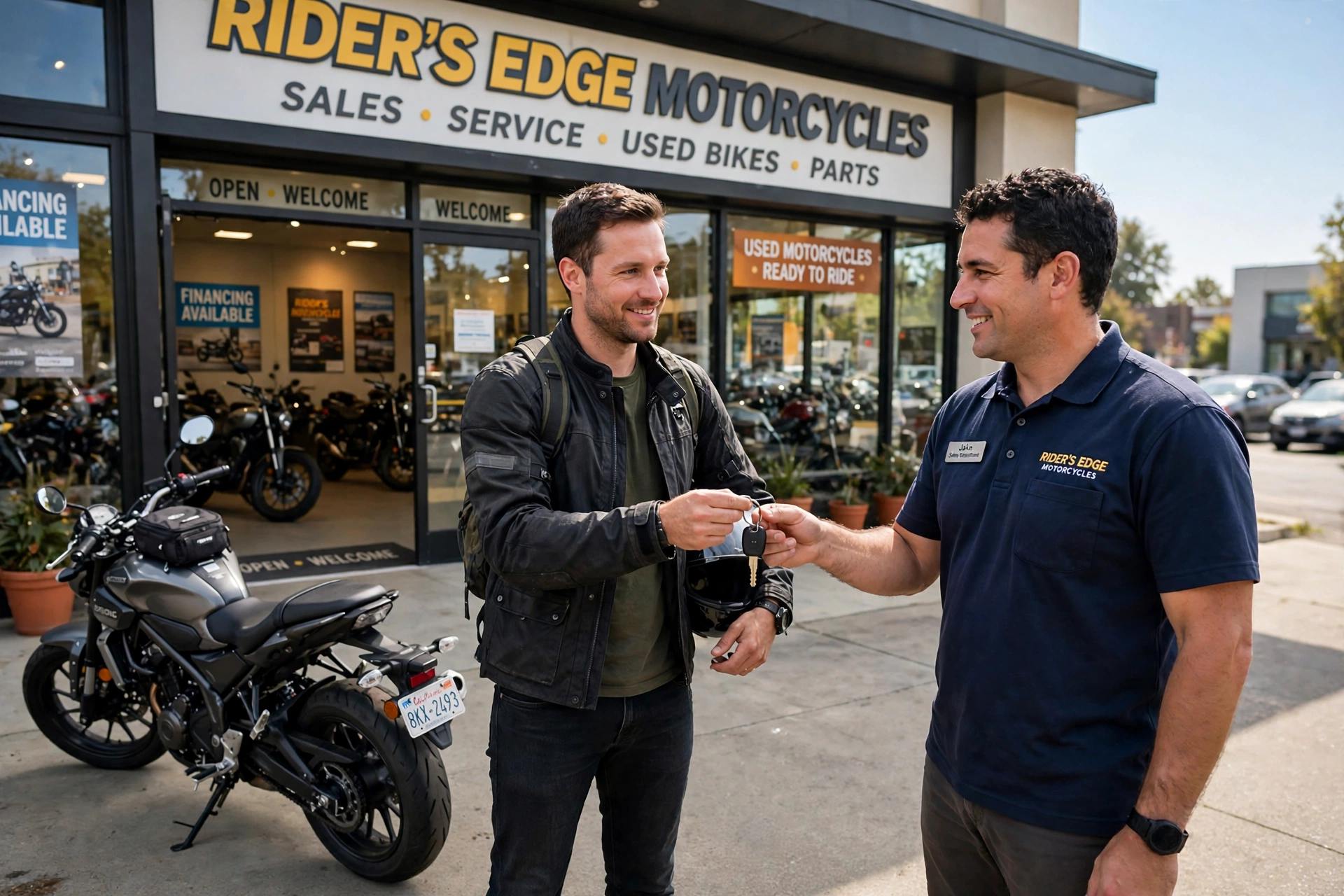
Trading in a motorcycle at a dealership is the fastest way to upgrade to a new bike. You ride in on your old machine, the dealer appraises it, and its value becomes credit towards your next bike, with the dealer handling most of the paperwork. It is convenient, but convenience has a price: dealers typically offer seventy to eighty-five percent of what you would get in a private sale. The steps in this guide help you get the best possible trade-in value and avoid the mistakes that cost sellers hundreds.
Step 1: Research your bike’s value before you visit
Never walk into a dealership without knowing what your bike is worth. Use Kelley Blue Book and NADA Guides to get a trade-in value for your exact year, make, model, and mileage. Then check what similar bikes are actually selling for: look at completed listings on Cycle Trader and eBay Motors, and at asking prices from dealers in your area. Write the numbers down. Your research is your negotiating power. If the dealer’s offer is far below the trade-in value from two independent sources, you will know it immediately, and you will have the evidence to say so.
Step 2: Prepare the bike properly
First impressions matter, and a clean, well-maintained bike is more likely to fetch a higher trade-in value. Wash the whole bike, including the wheels, chain, engine casing, and exhaust. Polish the chrome, touch up small paint chips with matched paint, and clean surface rust from brake rotors. Then do basic maintenance: change the oil, top off brake fluid, coolant, and transmission oil, and check the tires and brakes. Replace worn tires and brake pads if they are close to the limit, and replace any burnt-out lights. Fix small, cheap problems: a dead battery, a worn grip, a cracked indicator lens. A detailed bike looks better and shows the dealer that the bike has been cared for, which is exactly what an appraiser wants to see.
Step 3: Gather your paperwork before you list
Having your paperwork ready streamlines the whole trade-in. Bring the bike’s title and current registration to prove ownership, your service records and receipts, the owner’s manual, and any spare keys. If the bike is still financed, bring your loan information and check your payoff amount before you visit. If you owe more than the bike is worth, you have negative equity, and you will need to cover the difference or roll it into the new loan, which is rarely a good idea. Also bring any original parts you swapped out and accessories you plan to include. Organised paperwork signals an organised seller, and it removes the dealer’s easiest reasons to lower the offer.
Step 4: Get an estimate first, then an appraisal
Many dealers now offer an online trade-in value tool. Use it to get a starting point before you visit, and be honest about condition and mileage so the estimate is useful. Then book an appraisal appointment. At the dealership, a representative will inspect the bike’s condition, mileage, and service history, and take it for a test ride. They will consider market demand for your make and model, and the cost of reconditioning the bike for resale. Ask for the offer in writing, with the reasoning behind it itemised. A verbal-only offer is easy to change later; a written offer is a starting point you can negotiate from.
Step 5: Negotiate the trade-in value
Do not accept the first offer without question. Use your research to support your case. Highlight recent maintenance, such as new tires or a fresh service. Mention comparable prices from online tools or local listings. If you have quotes from two or three dealers, say so: competition is your best leverage. Remember that the trade-in and the purchase are two separate transactions, even though they happen at the same time. Negotiate each one on its own. A dealer who gives you a generous trade-in value but a poor price on the new bike has not given you a good deal at all. Get both numbers in writing before you agree to anything.
Step 6: Know when to walk away
Trading in is convenient, but it is not always the right choice. If the dealer’s offer is far below your research, or the dealer will not put it in writing, walk away. You can always sell the bike privately, where you will usually get more money, even though it takes more time and effort. A private sale means listing the bike, handling enquiries, and meeting buyers yourself, but for a bike worth several thousand, the difference can be a thousand or more. If you need cash in forty-eight hours, an instant-buy service will make an offer and collect the bike, but expect seventy to eighty-five percent of retail value, the same discount a dealer takes for the same convenience.
Step 7: Finalise the trade-in and purchase
Once you have agreed on a trade-in value, complete the transaction carefully. Apply the trade-in credit to the purchase price, and check the numbers on the paperwork before you sign: the trade-in value, the price of the new bike, the loan payoff if any, and the amount you still owe. Complete the transfer of ownership with the dealer, and get a signed bill of sale or transfer receipt. Cancel your insurance only after confirming the lien release and the transfer. Keep copies of everything. The dealer takes care of most of the paperwork, which is one of the real benefits of trading in, but it is still your responsibility to check that the paperwork is right.
Smart timing and other trade-in tips
Trading in during the off-season can work in your favour: dealers have more time, and you have time to prepare your bike and compare offers before the spring rush. Bring everything that came with the bike, including manuals, spare keys, and original parts, because missing items give the dealer a reason to reduce the offer. Get pre-approved for financing elsewhere before you visit, so you are negotiating from strength rather than depending on the dealer’s finance offer. And trust your instincts: a dealer who rushes you, avoids questions, or pressures you to sign is not a dealer you want to buy from.
Final thought
Trading in a motorcycle at a dealership is simple when you prepare first: research the value, clean and service the bike, gather the paperwork, get a written offer, and negotiate the trade-in and the purchase separately. Dealers who do this well buy bikes every week; a private seller who follows the same steps gets the same result. And if you are a dealer, the same habits apply at scale: a clear appraisal process, honest valuations, and quick, fair offers are what turn a trade-in desk into a steady supply of quality used bikes for your showroom.